
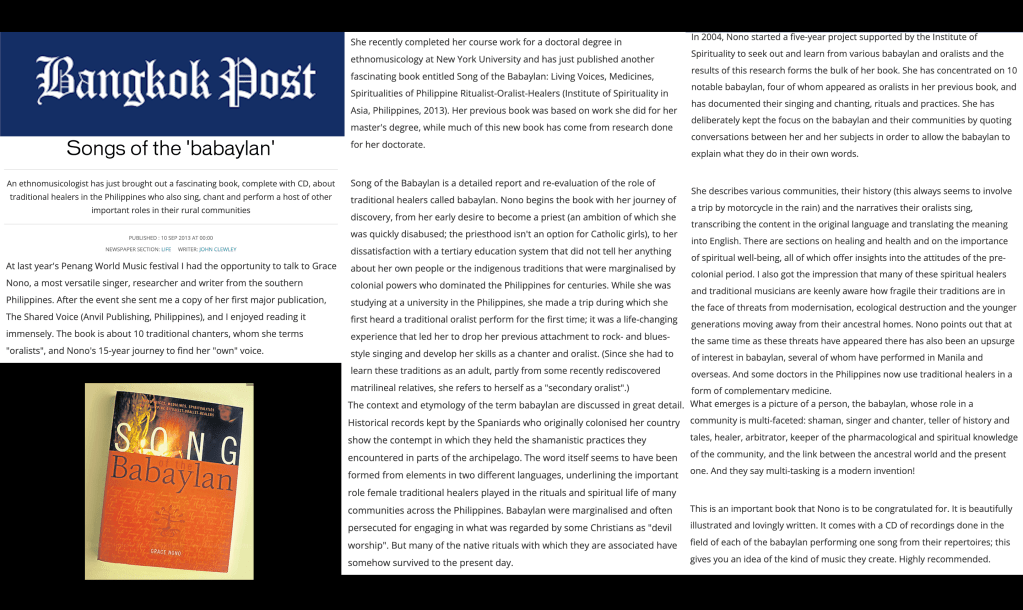
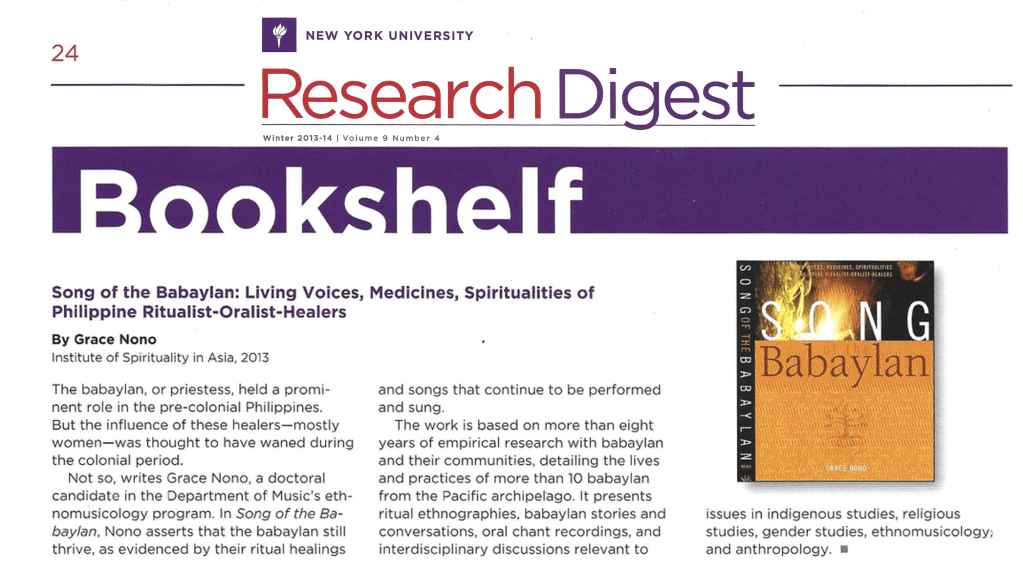
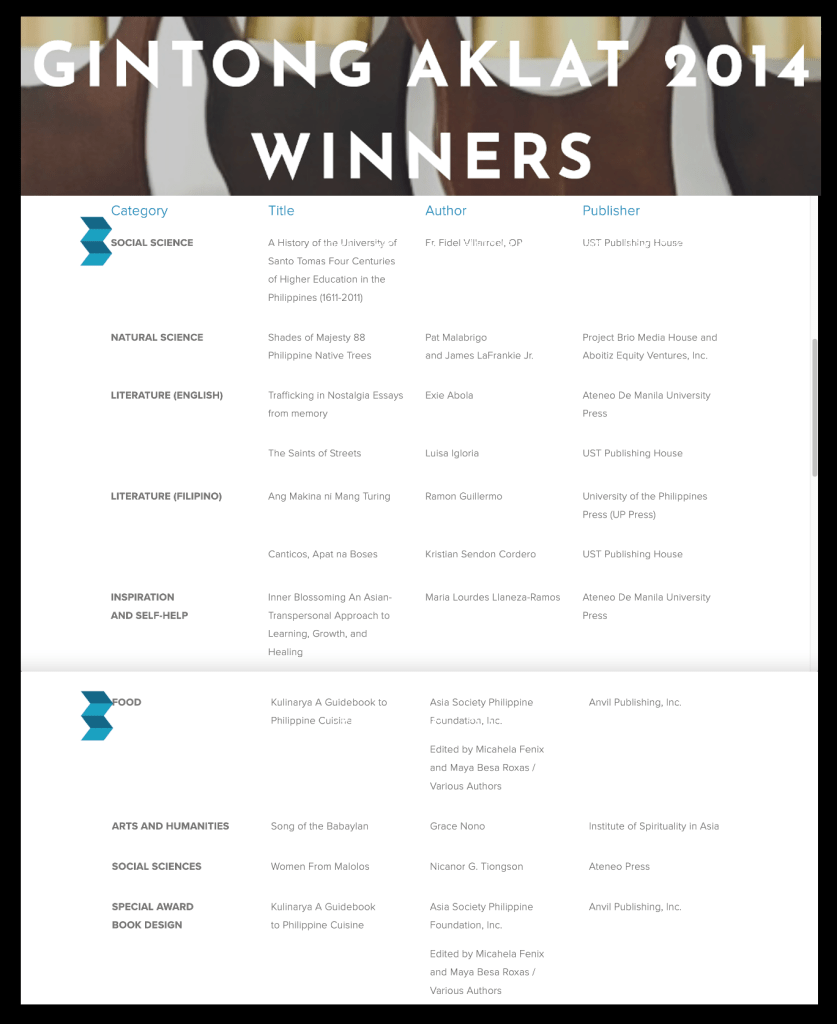
Song of the Babaylan: Living Voices, Medicines, Spiritualities of Philippine Ritualist-Oralist-Healers
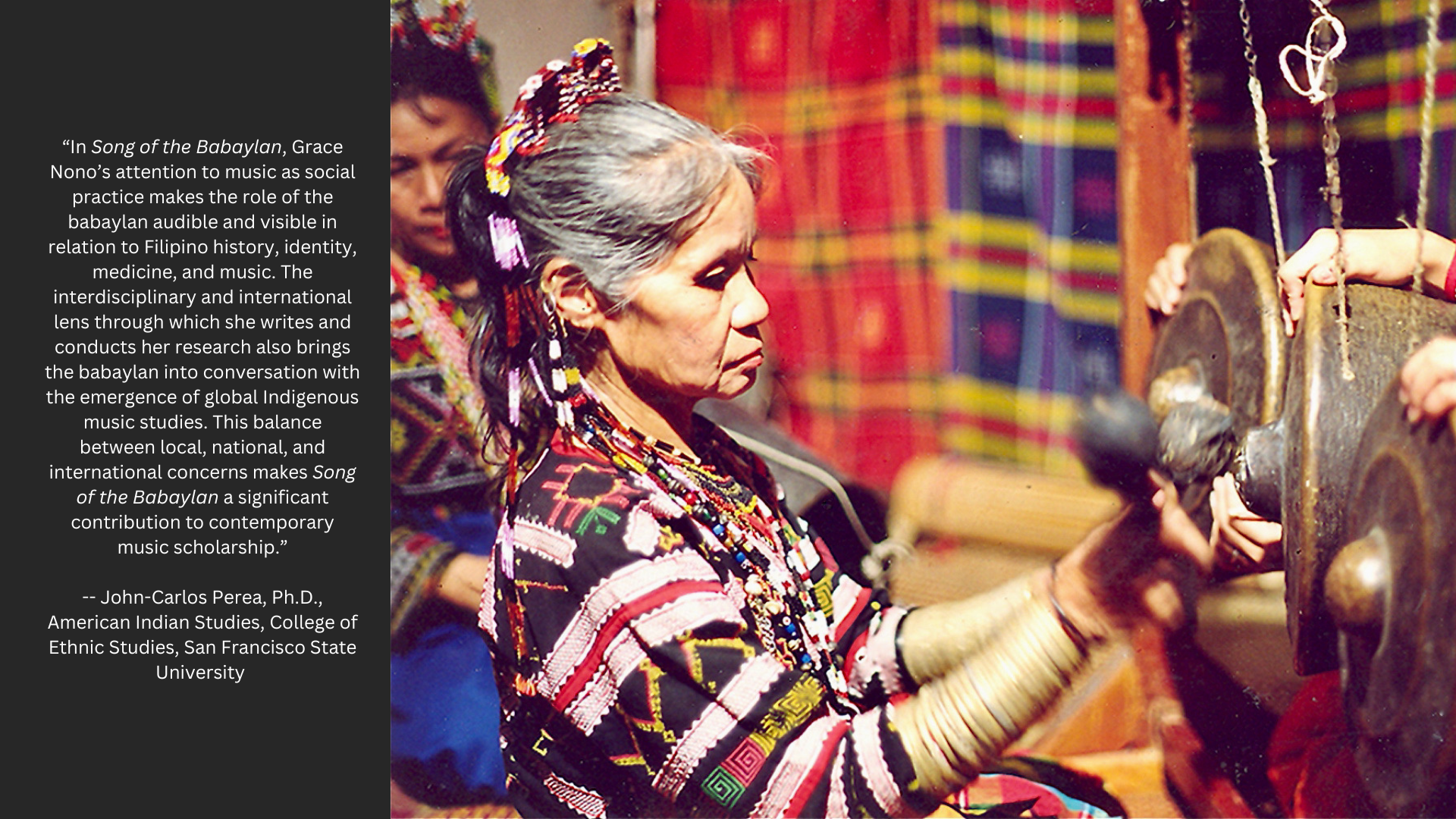
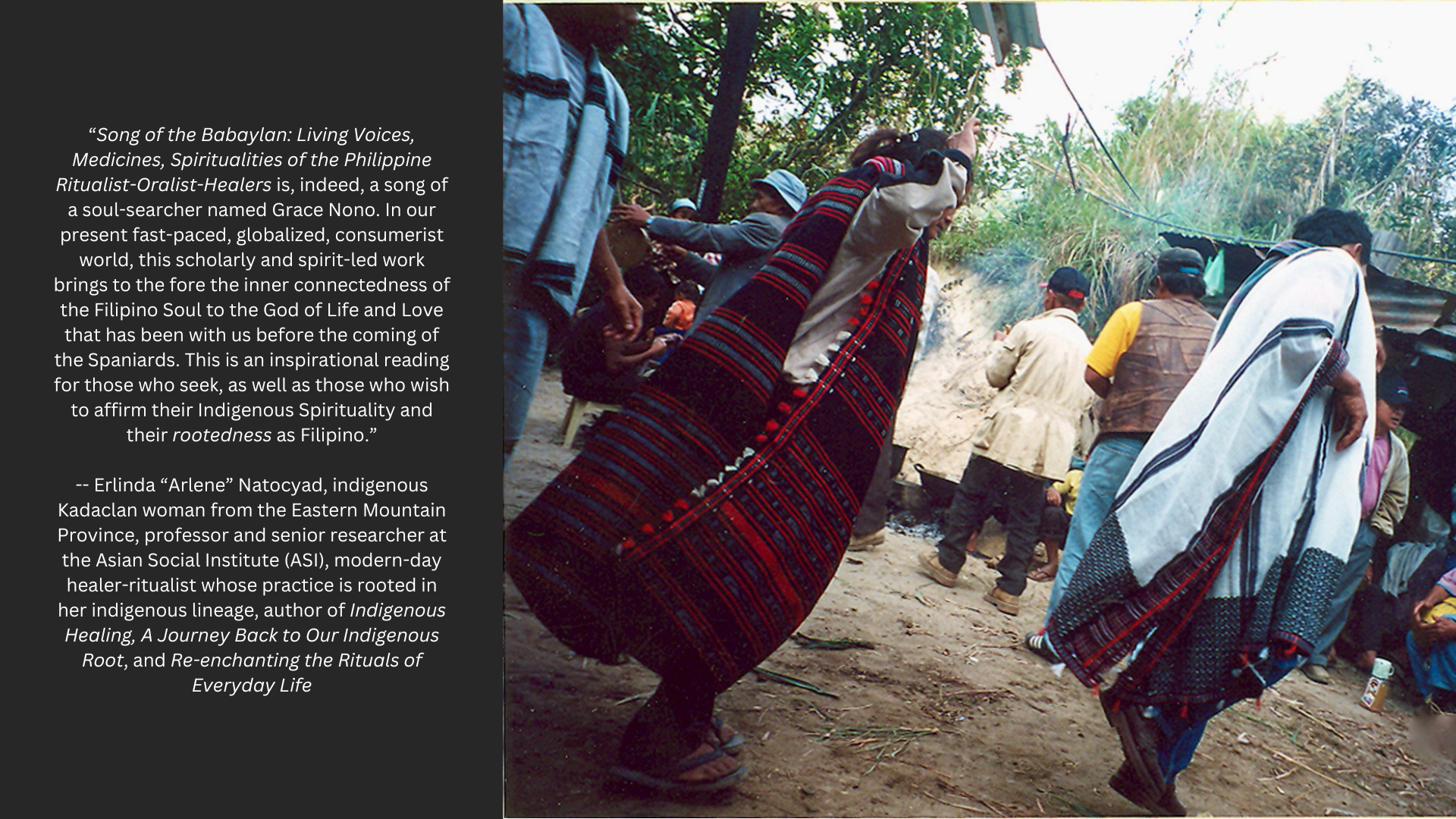
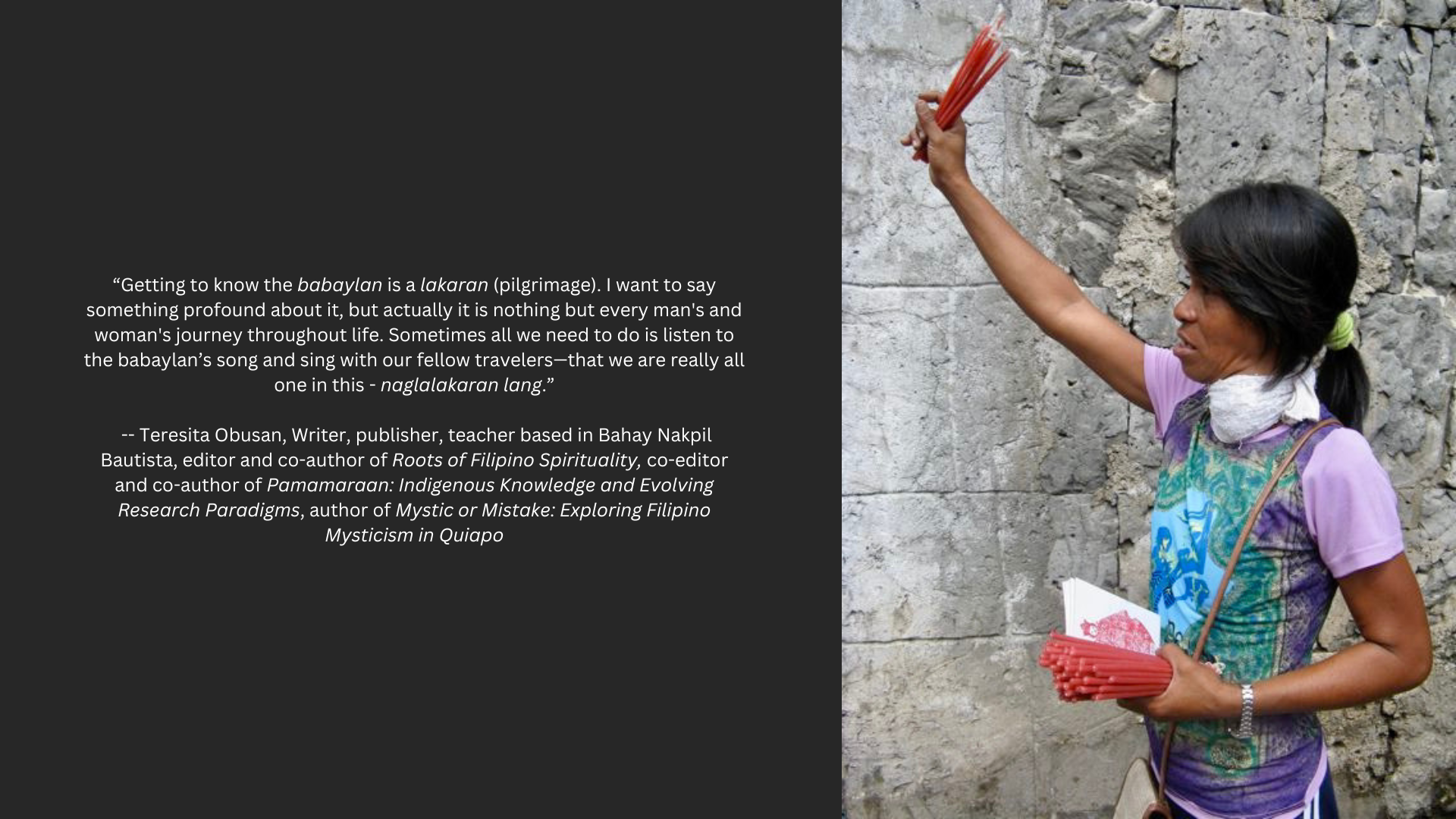
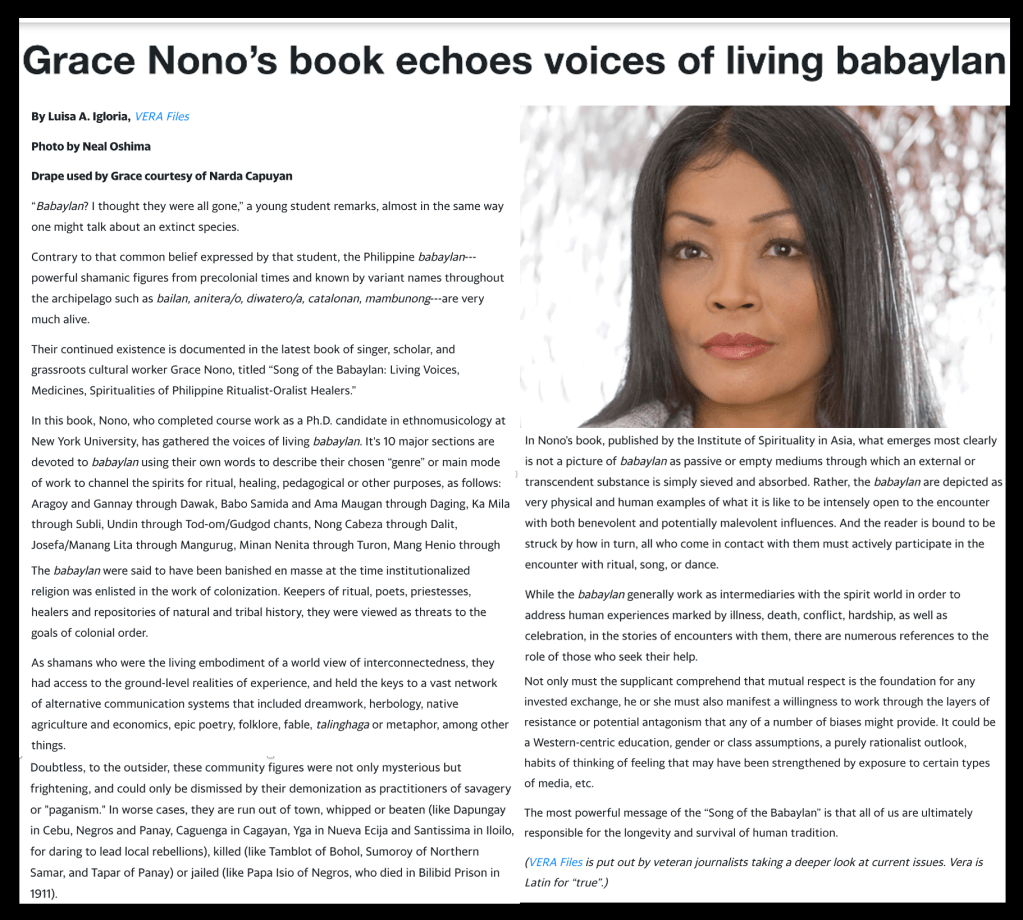
Responding to claims that Philippine ritualists-oralist-healers popularly referred to as “babaylan” were eliminated by the histories of Spanish and American colonizations, Song of the Babaylan: Living Voices, Medicines, Spiritualities of Philippine Ritualist-Oralist-Healers (Institute of Spirituality in Asia, 2013) shows us that these continue to exist in the present time, as testified, among others, by their songs, rituals, and healings that continue to be practiced today.
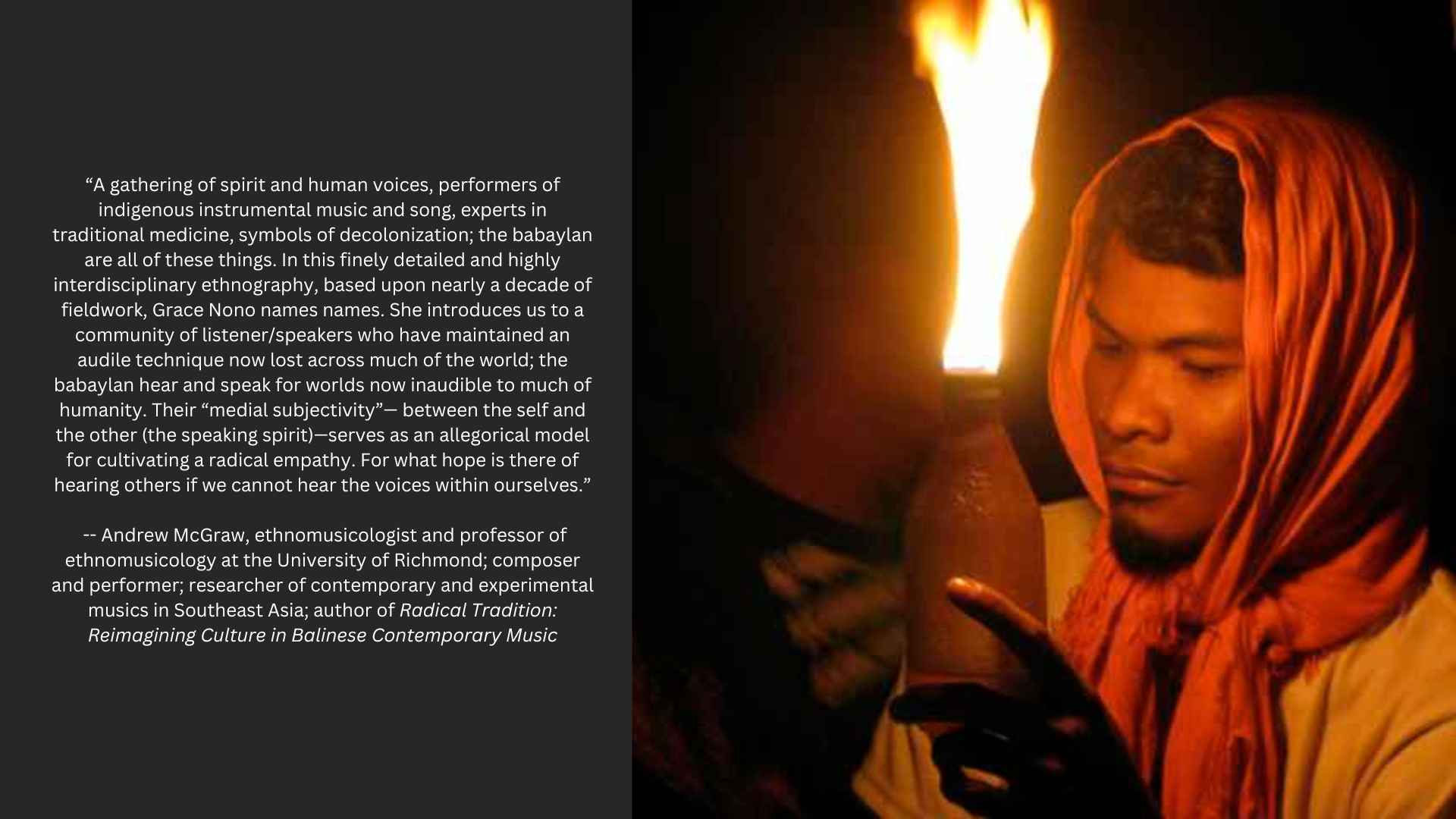
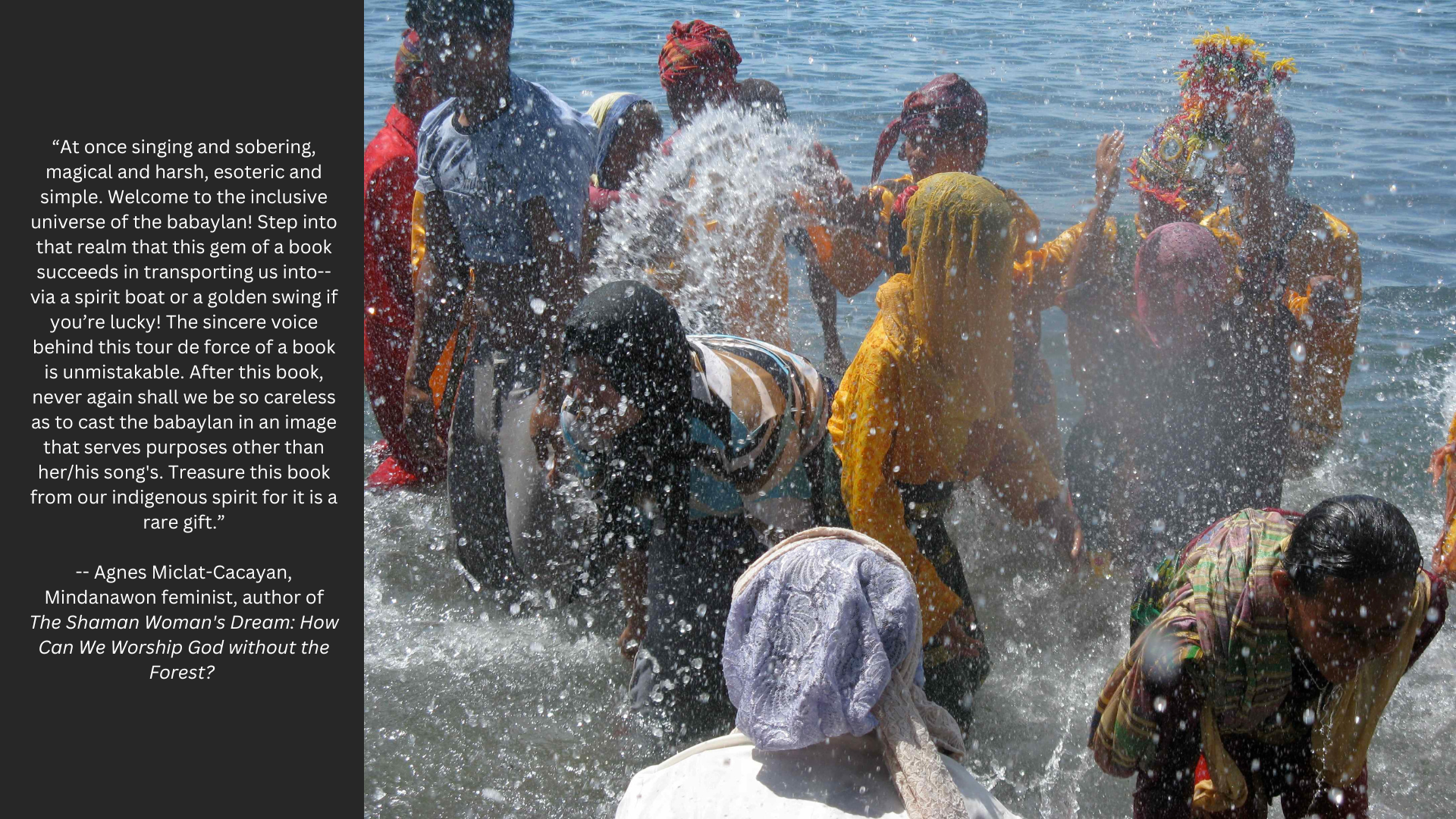
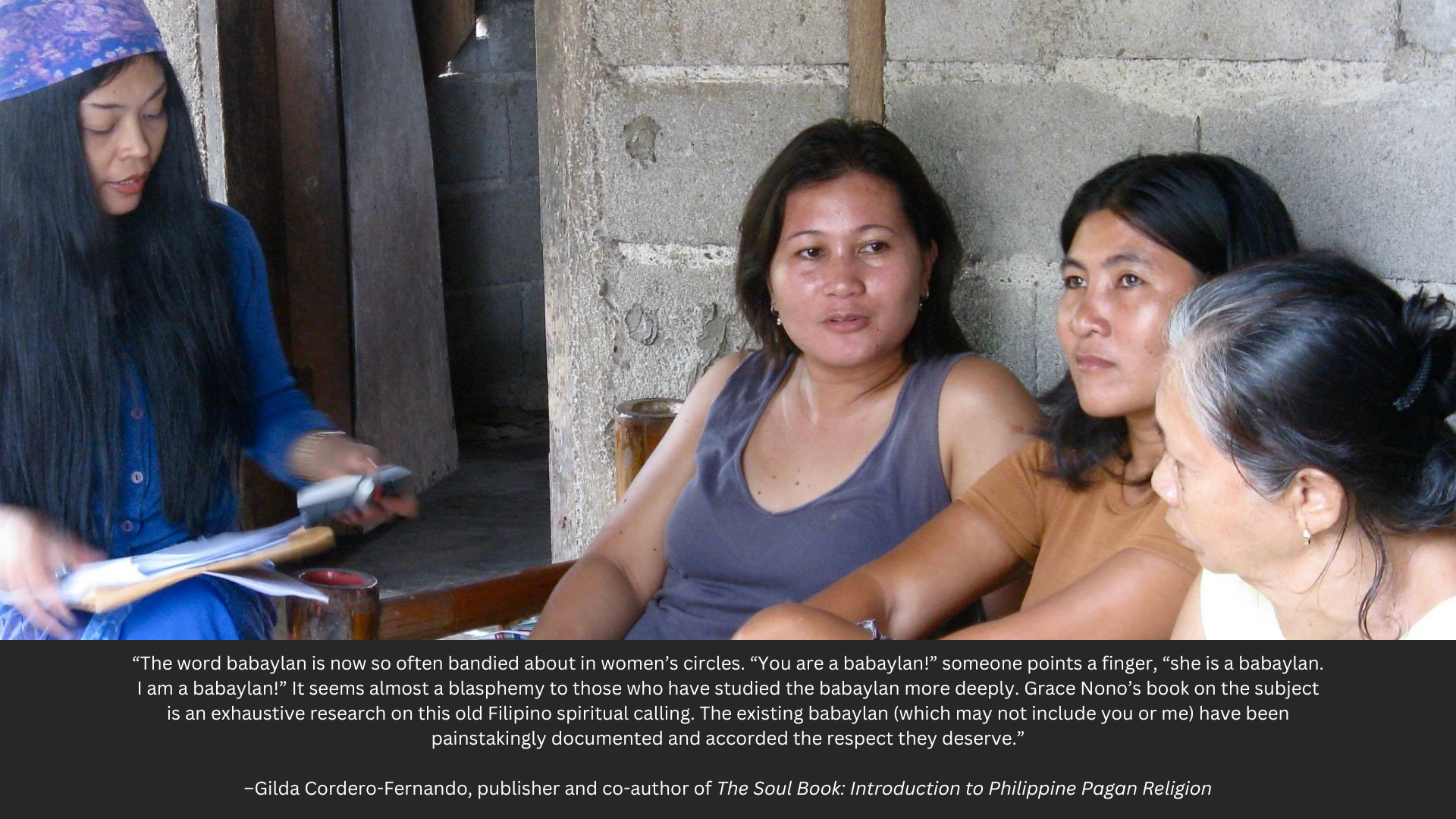
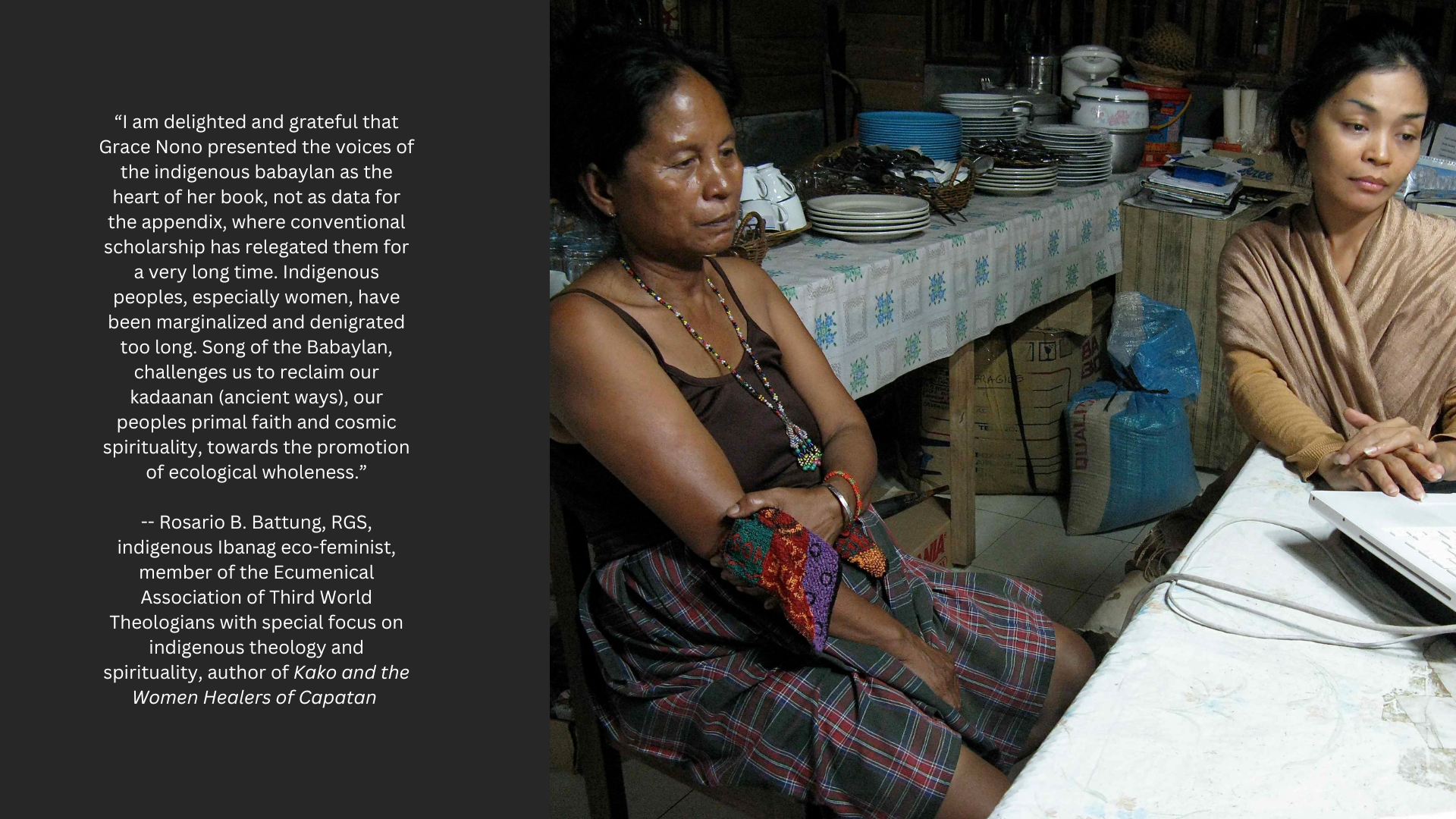
Based on over eight years of research with various Philippine ritualists-oralist-healers and people they work closely with, the book details the lives and practices of a mangilu in Tuguegarao, an andadawak in Kalinga, a mambunong in Benguet, a subli matremayo in Batangas, a babalyan in Palawan, a maninuog in Cebu, a mamuhat-buhat in Camiguin, a baylan in Agusan, a patutunong in Maguindanao, and a tau m’ton bu in South Cotabato, Philippines. It presents ritual ethnographies, babaylan stories and conversations, oral chant recordings, and discussions relevant to issues in indigenous studies, religious studies, gender studies, and ethnomusicology.
International Edition:
What they say about Song of the Babaylan











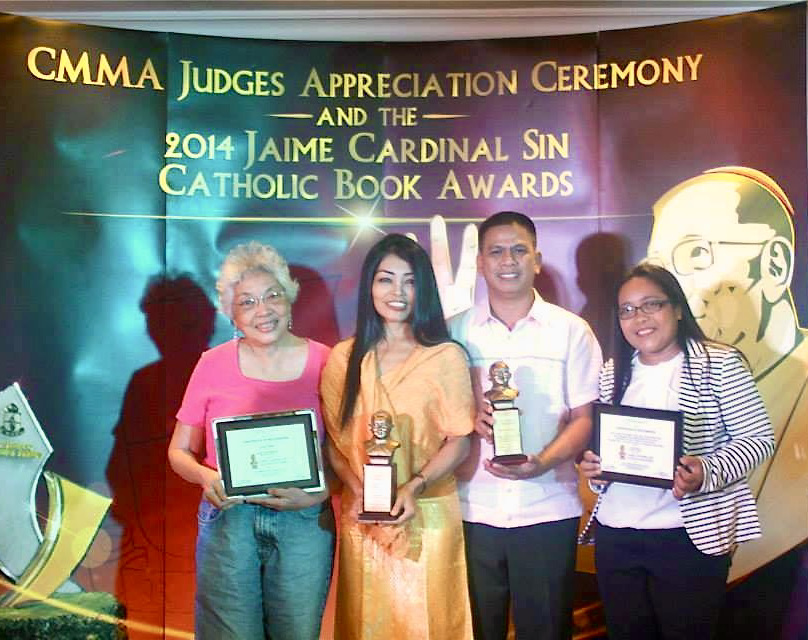

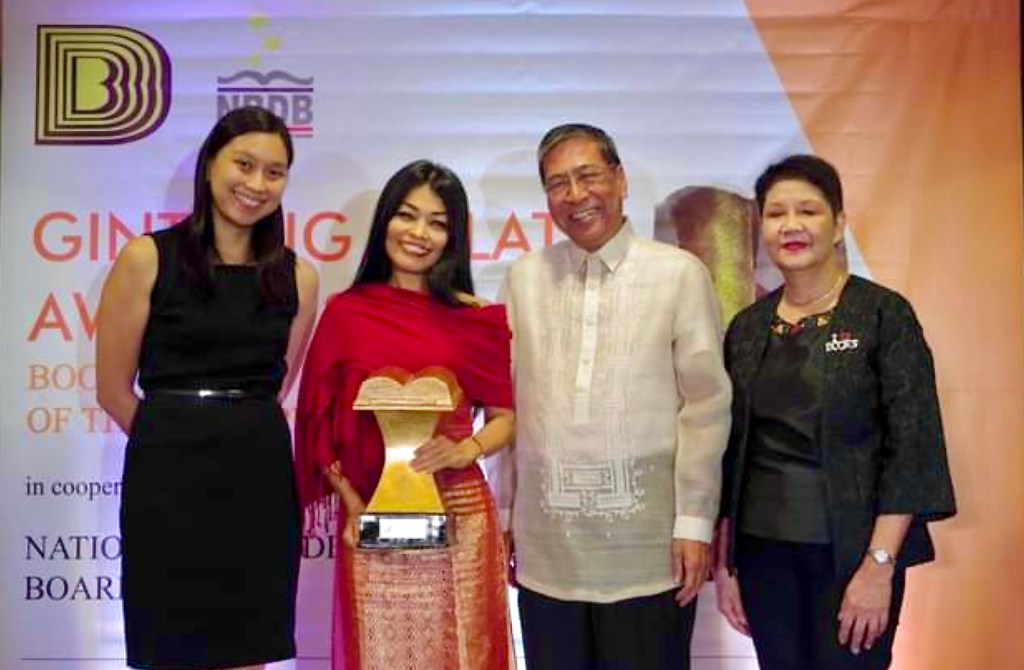
 Grace Nono